
How to Choose a Reliable Paper Bag Manufacturer in China
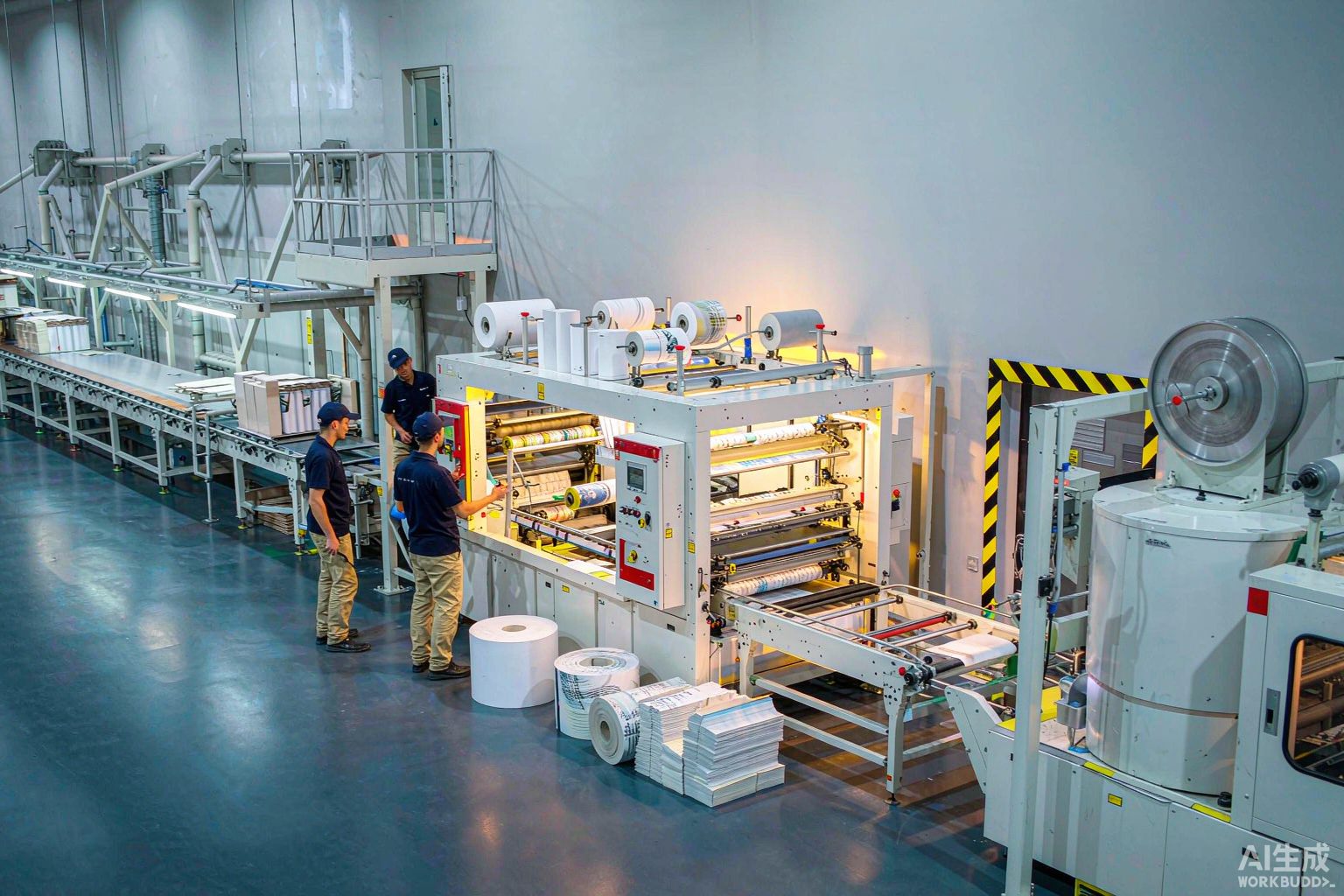
Search for "paper bag manufacturer China" and you will get thousands of results — factories, trading companies, agents and a few operations that are little more than a Gmail address. After more than a decade of producing kraft paper bags for overseas buyers, our team has heard every sourcing horror story: containers of misprinted bags, deposits that vanished, "factories" that turned out to be a reseller's WeChat account.
This guide is the checklist we would give a friend. Use it to filter suppliers before you send a single dollar.
1. Confirm It Is a Real Factory, Not a Trading Company
Trading companies are not inherently bad — some add real value in consolidation and QC. But you should know which one you are dealing with, because a middleman adds 10-20% to your cost and reduces your control over production.
- Check the business license. Ask for a copy and look at the registered scope: "生产" (production/manufacturing) vs "贸易" (trading). Any legitimate supplier will share this.
- Ask for a video call on the factory floor. A real factory can walk you from the printing press to the packing area in one call. A trader will book a "visit" and make excuses.
- Look at the address. Factories sit in industrial zones, not office towers. Cross-check the address on Baidu Maps or ask for a live location pin.
2. Evaluate the Sample Like a Quality Inspector
Every serious supplier offers samples before bulk production. What separates professionals from amateurs is what you do with the sample:
- Measure, don't assume. Check dimensions with a ruler — a 5 mm error on a bag width can mean your product doesn't fit.
- Test the handles. Fill the bag with weight close to your real use case and carry it for two minutes. Handles are the most common failure point.
- Rub the print. Drag a dry tissue firmly across the printed area. Significant ink transfer means cheap ink or poor curing.
- Check color against your proof. View it in daylight, not just office lighting. Ask the factory what color tolerance (Delta E) they guarantee.
3. Understand MOQ — and How to Negotiate It
MOQ exists because printing plates, machine setup and paper cutting all have fixed costs. For custom printed paper bags, a 3,000-5,000 pcs MOQ is the industry norm; anyone quoting 500 pcs for full custom printing is either losing money to win you (and will cut corners) or quietly outsourcing.
Legitimate ways to lower your MOQ:
- Use a stock bag size the factory already produces — you skip die and setup costs.
- Reduce printing colors from 4-color process to 1-2 spot colors.
- Combine multiple SKUs in one run if the size and material are identical.
- Commit to a repeat order schedule — most factories lower MOQs for predictable business.
4. Audit the Quality System, Not Just the Product
One good sample proves nothing about the tenth carton in your container. Ask how quality is controlled during production:
- Is there incoming material inspection (paper GSM, moisture, bursting strength)?
- Is there in-line inspection with defined checkpoints, or do workers "just watch the machine"?
- Do they follow AQL sampling (typically AQL 2.5) before shipment, and will they share the inspection report with photos?
- Will they accept a third-party pre-shipment inspection (SGS, TÜV, QIMA)? A factory that refuses third-party inspection is telling you something.
5. Verify Certifications That Matter in Your Market
Certification claims are easy to print on a website. Verify them:
- FSC: ask for the FSC certificate number and verify it on info.fsc.org. Without chain-of-custody, "FSC paper" is just marketing.
- Food contact: for food packaging, request migration test reports against FDA 21 CFR or EU 10/2011 for the specific material you will use — not a generic report from years ago.
- Social compliance: BSCI or Sedex audits matter if you supply European retail chains; many require them contractually.
6. Protect Your Payment
- Standard, safe terms: 30% deposit, 70% balance before shipment by T/T. Be cautious of anyone demanding 100% upfront — or offering 0% deposit on a first order (usually a hook for a scam or a desperate workshop).
- Pay only to a company bank account in mainland China or Hong Kong, China matching the business license name — never a personal account.
- For first orders above $20,000, consider an escrow arrangement or trade assurance through a recognized platform.
7. Red Flags That Should End the Conversation
- Quotes returned in 5 minutes without asking about size, GSM or printing — they haven't calculated anything.
- Prices 30%+ below every other quote — the difference will come out of paper weight, ink quality or your delivery date.
- Refusal to provide a business license, factory video or references.
- No written specification in the proforma invoice — if size, GSM, color tolerance and delivery date aren't written down, they don't exist.
- Pressure tactics: "price goes up tomorrow", "only one production slot left". Real factories plan in weeks, not hours.
The Short Version
A reliable paper bag manufacturer will happily show you the factory, put specifications in writing, accept third-party inspection, and explain their MOQ instead of hiding it. If a supplier makes any of these difficult, keep looking — the Chinese packaging industry is deep, and good partners exist at every price level.
At Ronggao Packaging we built our entire export process around this checklist — video factory tours, written specifications and independent inspections can be agreed as part of your order requirements. If you are comparing suppliers right now, send us your bag specification and judge us by the same standard.