Flexo, Offset, Silk-Screen, Heat Transfer or Digital? A Buyer's Guide to Bag Printing
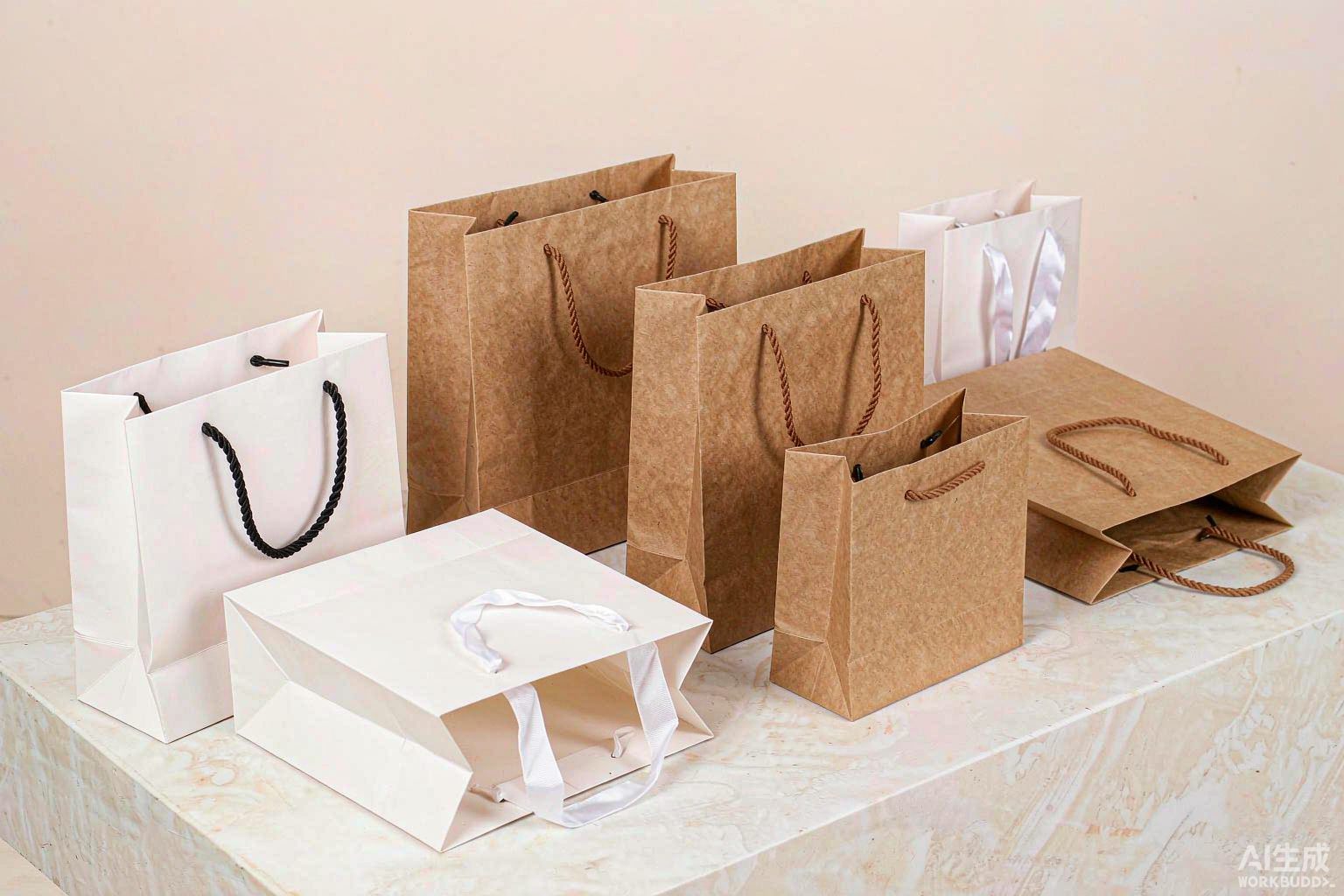
"Which printing method should my bags use?" is the wrong first question. The right one is: "What does my artwork need?" Every printing process has a sweet spot defined by color count, detail level, material and order quantity. This guide explains the five methods we run every day on our own floor — with real cost and MOQ numbers, not marketing adjectives.
The 30-Second Answer
- Flexo for large runs of bold, simple designs on kraft paper, non-woven fabric or PE film.
- Offset for photographic quality on paper gift bags and coated board.
- Silk-screen for 1-2 spot colors on non-woven, canvas and cooler-bag fabric.
- Heat transfer for full-color artwork on fabric in small to mid quantities.
- Digital for samples, short runs and full-color printing on PVC.
The Five Methods at a Glance
| Method | Best materials | Colors | Typical MOQ | Cost profile |
|---|---|---|---|---|
| Flexo | Kraft paper, non-woven, PE film | 1-8 spot colors | 5,000-10,000 pcs | Plates cost upfront; lowest unit cost at volume |
| Offset | Art paper, coated board | Full CMYK + spot | 3,000-5,000 pcs | Mid; best photographic quality on paper |
| Silk-screen | Non-woven, canvas, cooler fabric | 1-4 spot colors | 1,000-3,000 pcs | Low setup, slower per piece |
| Heat transfer | Non-woven, polyester fabrics | Full color | 1,000-3,000 pcs | Mid-high; gradients on fabric without plates |
| Digital | PVC, small-batch paper | Full color, no plates | 500-1,000 pcs | Zero setup, highest unit cost |
Flexo Printing: The Volume Workhorse
Flexography uses flexible relief plates on fast roll-to-roll presses — we run two 8-color lines. It prints directly on kraft paper, non-woven fabric and PE film at high speed, which is why it dominates large orders of shopping bags, grocery totes and poly mailers. Plate making adds a fixed cost per color, so flexo only becomes economical above roughly 5,000-10,000 pieces; from there it is the cheapest ink per bag you can buy. Fine gradients and small text are its weak points.
Offset Printing: Photographic Quality on Paper
Offset lithography transfers ink from plate to blanket to paper, holding extremely fine detail. Our 4-color Heidelberg press is what makes art paper gift bags look like they do: smooth gradients, rich solids and crisp small text that flexo cannot match. Offset prints flat sheets that are then laminated and converted into bags, so the process suits coated papers only. If your design includes photography or complex branding on a paper bag, this is the method.
Silk-Screen Printing: Bold Spot Colors on Fabric
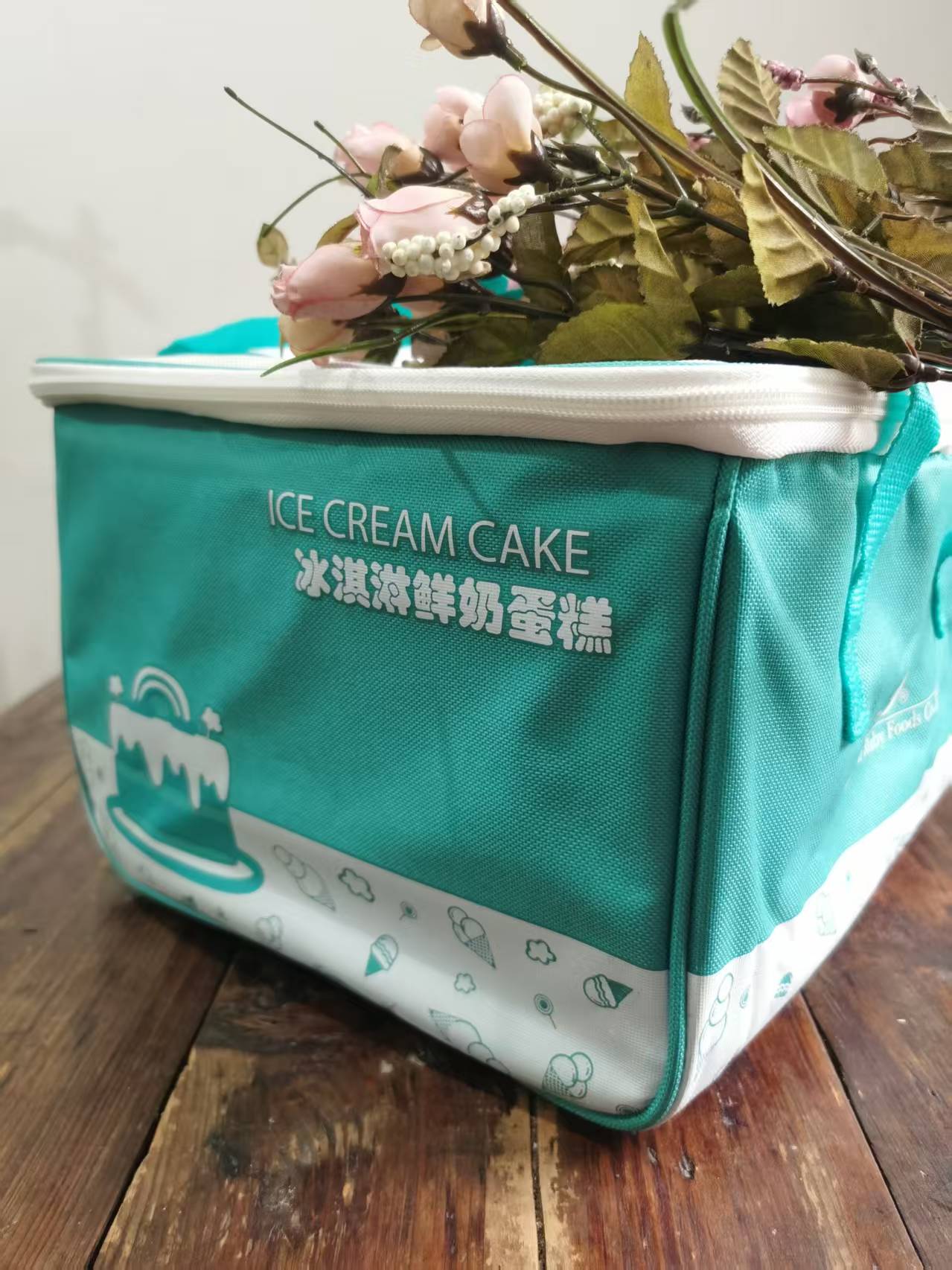
Silk-screen pushes a thick layer of ink through a mesh stencil onto the material. The result is an opaque, vivid print that sits on top of non-woven fabric, canvas and cooler-bag shells — colors stay bright even on dark materials. Each color needs its own screen and its own pass, so 1-2 spot colors is the economical sweet spot and every extra color adds cost. The cake and ice-cream delivery cooler bags below are a typical silk-screen job: one bold graphic, one color, thousands of pieces.
Heat Transfer: Full Color on Fabric, No Plates
Heat transfer prints the artwork onto a release film first, then presses it onto the bag under heat and pressure. It brings near-photographic, full-color results to non-woven and polyester fabrics — designs that silk-screen simply cannot reproduce. The yellow supermarket shopper on our non-woven bags page shows what full-color transfer looks like in production. The print area has a slightly smooth hand feel, and very large prints can feel less breathable, but for promotional shoppers it is the most flexible full-color option at 1,000-3,000 pieces.
Digital Printing: Zero Setup, Instant Start
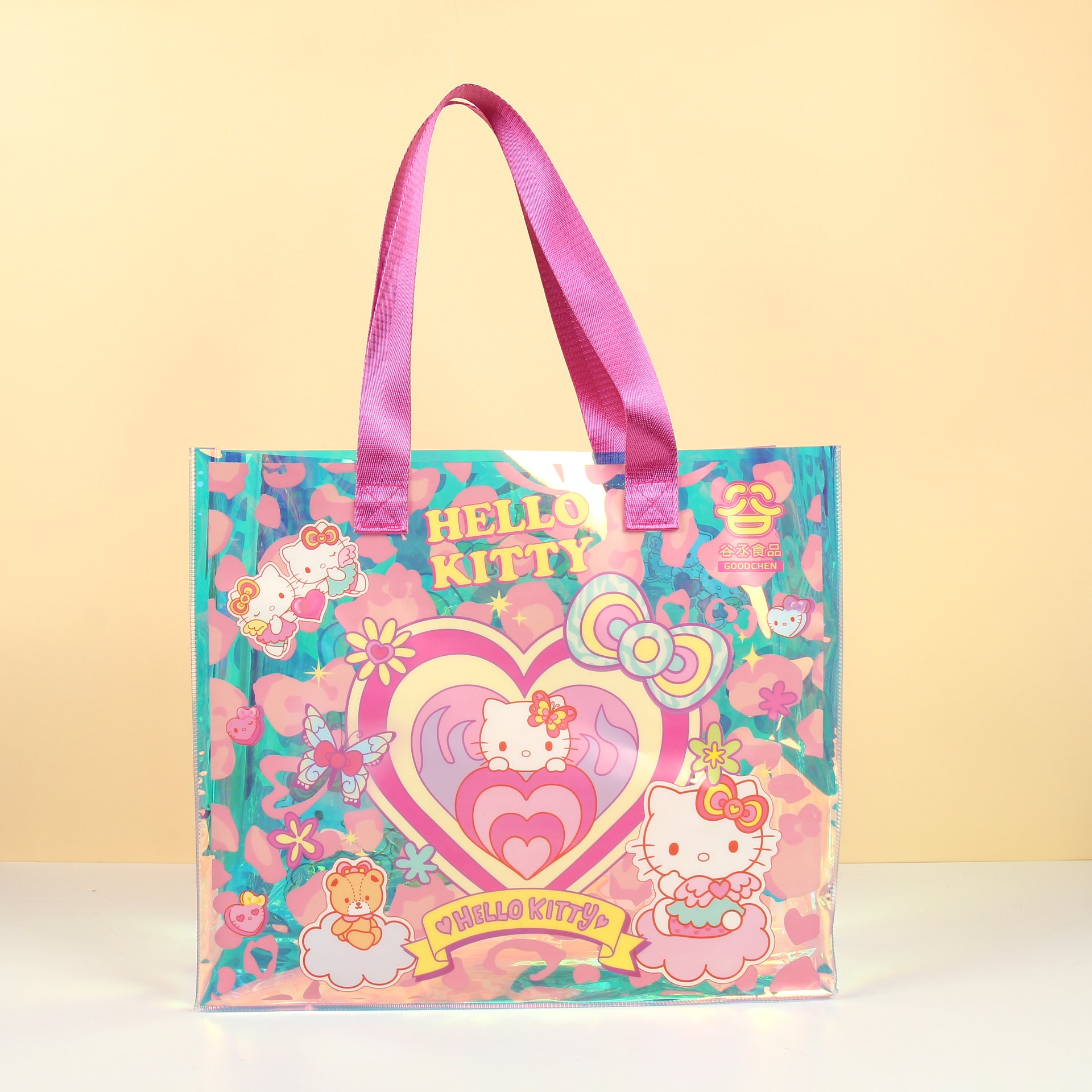
Digital presses print directly from the artwork file — no plates, no screens, no setup cost. That makes digital the natural choice for samples, market tests and runs below about 1,000 pieces, and it is the standard way we produce full-color prints on PVC tote bags like the character tote below. Unit cost is the highest of the five methods, so once a design is proven, most buyers move volume production to flexo or offset.
Let Your Artwork Choose the Method
What MOQ and Cost Really Look Like
Setup cost and unit cost pull in opposite directions. Plates and screens make flexo and offset expensive to start but cheap to continue; digital starts free and stays expensive per piece. A strategy many of our buyers use: approve the design with a digitally printed sample run of 100-500 bags, then switch to flexo, offset or silk-screen for the mass order — you de-risk the artwork without paying setup twice.
Get a Free Print Recommendation
Send us your artwork (AI, PDF or a clear photo is fine) and target quantity, and our prepress team will recommend the method, flag any design risks and quote within 12 hours — including a free digital proof. Start your inquiry here, or browse all seven product lines first.